
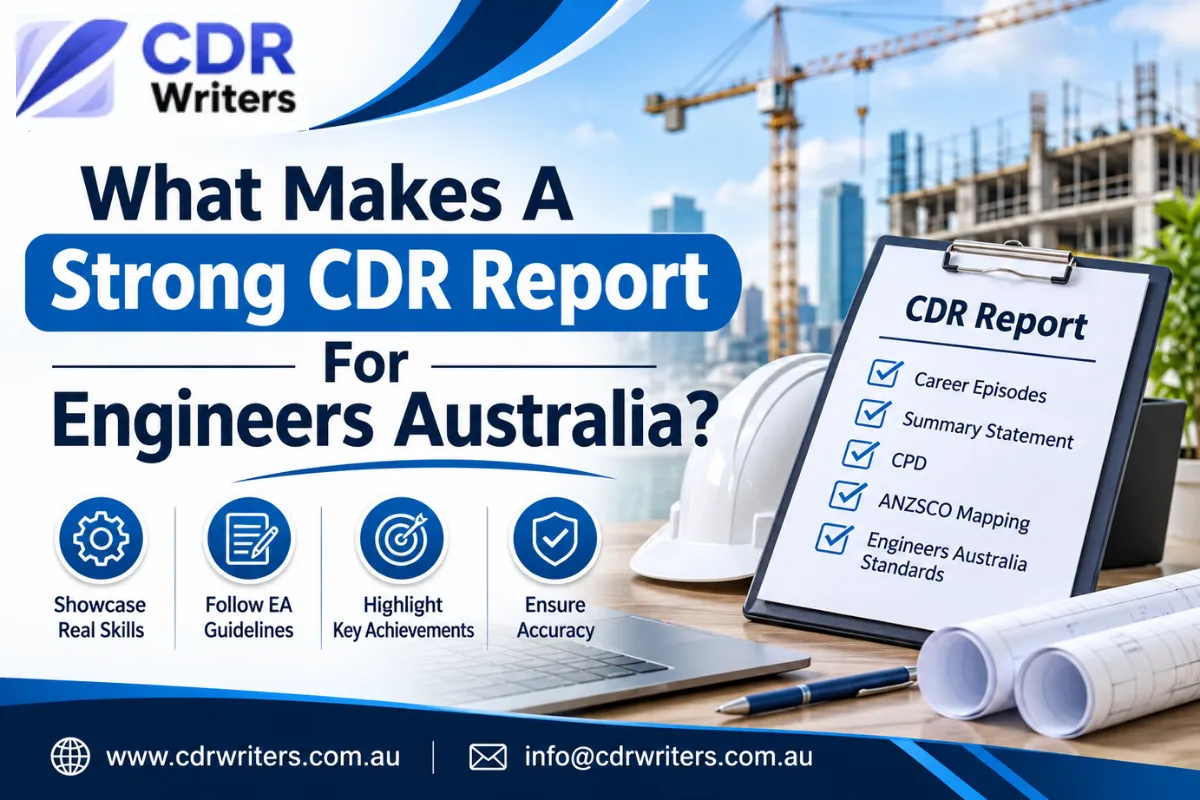
What Makes A Strong CDR Report For Engineers Australia?
Getting ready for Engineers Australia skills assessment? Know what makes a CDR report compelling, starting from the right structure of career episodes to the best engineering examples, competency demonstration, and supporting documents for the application.
Keeping Your CDR Report Clear And Well-Structured
An engineering career in Australia can offer many possibilities. Engineers with foreign qualifications usually have to demonstrate that their engineering skills and experience match the Australian standards. A Competency Demonstration Report (CDR) is an essential step in the process.
Writing an impressive CDR is about much more than just ticking off qualifications and detailing past job experiences. Rather, it is about providing a clear demonstration of engineering knowledge, skills, and expertise.
All elements of the report must help establish the engineering background of the writer. A well-written application will make it easier for Engineers Australia to understand the experience of the applicant and evaluate their professional abilities more clearly.
Clear Career Episodes Make Engineering Skills Easier To Assess
The career episodes form an integral component of the CDR document. They help to demonstrate the engineering experience of an engineer and how the technical knowledge has been put into use in real-life situations.
Each career episode needs to be centered around a particular project or engineering endeavor. It must highlight the responsibilities and contribution of the candidate.
Discussing technical decision-making, difficulties, and outcomes aids assessors in evaluating the applicant’s engineering ability and practical experience.
Personal Contributions Help Demonstrate Professional Ability
Engineers Australia must understand the role played by the applicant in each of the activities listed. Just listing what a company or a team has done is not enough to prove personal capabilities. The report must explain the duties and decision-making processes of the applicant.
The use of first-person statements will enable the identification of the contributions made. In addition, this will help the assessor to identify the contributions of the applicant and those of other team members.
Every career episode should be written with the view of highlighting the involvement of the applicant throughout the process. Descriptions of planning, technical decisions, problem solving, and completed tasks will assist in demonstrating professional capability.
Professional Writing Makes Every Section Easier To Understand
The quality of the writing may affect the understanding of the experience of the applicant by the assessor. The report containing many long sentences, complex descriptions, or repetition of information makes it difficult to distinguish important information.
Professional writing is not about the use of complex vocabulary. Professional writing involves writing technical information in a clear and concise manner. Each paragraph should contain only one idea and be connected logically to the following paragraphs.
Furthermore, students can collaborate with professional CDR writers Australia to enhance the structure, language, and presentation of their report. Proper writing assistance will allow them to organise their experience efficiently while making sure that the final work is effective.
Strong Technical Details Show Real Engineering Knowledge
The CDR report should be based on technical skills rather than routine activities that a candidate undertakes. The engineer should describe methods, technologies, and skills utilised at work. This will serve as a demonstration of how the engineering education was put into practice by the candidate.
Technical information must be relevant to the role of the candidate. Too much technical information can make the report hard to understand, whereas too little information can fail to demonstrate the candidate’s competence.
Candidates must concentrate on providing information about:
· Engineering process and techniques
· Reasons for technical decisions
· Problems encountered during the process
· Solution found and its outcome
Technical details in balance will help make the evaluation easier and will be useful for conveying the professional knowledge of the applicant.
A Clear Summary Connects Experience With Engineering Competencies
The summary statement consolidates all of the main points from the career episodes into one statement. This enables the candidate to demonstrate how their experiences meet the competency elements as listed. Each point must be backed up by information provided in the career episodes.
The summary statement should be well-written, concise, and well-structured. It must not contain any new claims or long sections that have been repeated from the report. Rather, it needs to relate the candidate’s activities to what Engineers Australia expects.
Proper preparation ensures that all of the necessary competencies are covered. The candidates must consider each of the statements carefully to ensure that the relevant information is included.
Original Content Protects The Value Of Engineering Experience
The Career Episodes Document (CDR) report needs to reflect the education, professional experience, and skills of the applicant. It is advisable not to copy the content from online samples or any other candidate’s career episodes. This might decrease the value of the application and put a question mark on the originality of your work.
Each career episode needs to be prepared according to the experiences of the applicant. All the technical aspects, project descriptions, and decision-making need to accurately depict the applicant’s experience.
It would be better for the applicants to first go through the existing originality rules and then submit the report. This can be useful to check for plagiarism or any other similarities in the content.
Plan Your Next Engineering Career Move With Confidence
The CDR assessment is an essential process for engineers wishing to have their qualifications and skills assessed in Australia. However, the registration and recognition processes will require some differences in requirements based on the backgrounds and intentions of the applicant.
Engineers considering NER registration in Australia should familiarise themselves with its requirements and process. This makes it easier for them to know what type of professional experience, qualifications, and documentation are necessary.
Early preparation also allows the engineers to spend more time organising their career documentation and gaining knowledge about their career options and the possible pathways to pursue their professional goals.
Frequently Asked Questions
What Is The Primary Function Of A CDR Report?
The Competency Demonstration Report serves as a document used by Engineers Australia to evaluate the qualifications and competencies of applicants who have not gained recognition of their qualifications via any accredited path. The report provides evidence of their education, technical knowledge, and experience.
How Many Career Episodes Are Needed In A CDR?
A typical CDR application consists of three Career Episodes. Each Career Episode is expected to include details about a particular engineering project or experience and indicate personal responsibility and tasks undertaken by an applicant.
Can an Applicant Write their Own CDR Report?
Yes, an applicant can write their own CDR report. They should comply with the existing Engineers Australia requirements and provide truthful information about all sections of the report.
What Are The Common Errors That Occur In A CDR Report?
The common errors are not making clear career episodes, plagiarism, lack of technical information, poor competency statements, and inconsistency in support documents. Applicants must also avoid talking about team success rather than their individual engineering success.
How Can An Applicant Make Their CDR Report Better?
Clear language, proper organisation of career episodes and provision of technical evidence will help applicants to improve their reports. Reviewing competency requirements, checking document accuracy, and proofreading the whole application will also contribute to improving the report’s quality.
Conclusion
The effective CDR report highlights the qualifications of the applicant, technical competence, and professional experience in structured form. Well-written career episodes, proper competency statements, and adequate supporting documents all help in making a valuable submission.
Candidates are encouraged to use their own content, provide proper technical explanations, and include individual achievements. Adhering to current requirements of Engineers Australia—and understanding the difference between ACS and EA assessment if you are unsure which assessing authority fits your background—may also help to avoid certain errors during preparation of the report.
Planning and careful analysis will allow engineers to represent their skills more confidently. The well-composed CDR report provides a better understanding of candidates’ professional background and will help to overcome the assessment process more efficiently.

I bridge the gap between technical engineering expertise and the demanding standards of Engineers Australia. Through this blog, I provide data-driven insights and guides to navigate the complexities of Skills Assessment. My mission is to transform complex career histories into compelling narratives that meet every EA requirement, ensuring a seamless migration journey for professionals to Australia.